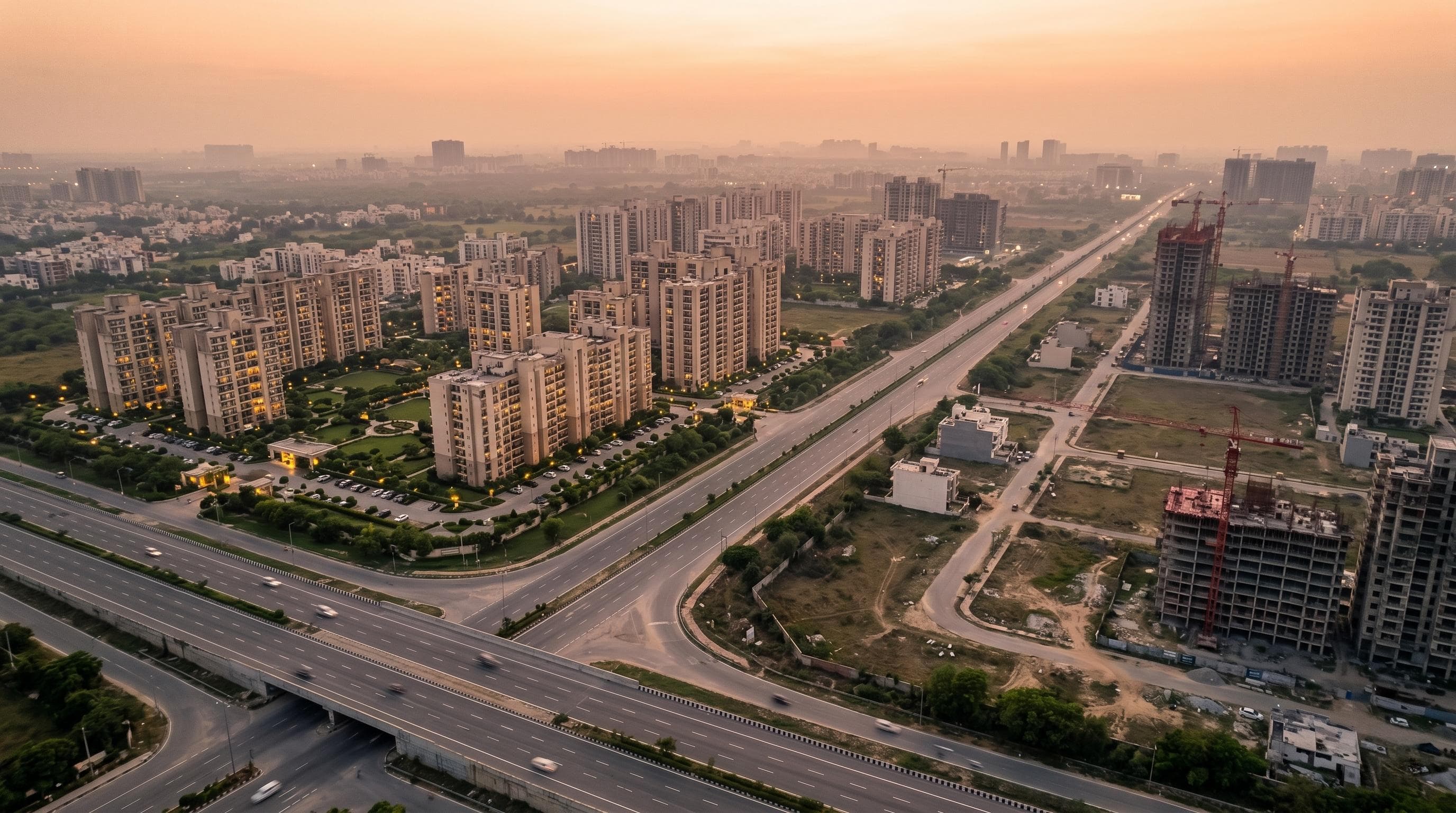

Gurgaon is not cheap. Anyone who tells you otherwise either lives in a PG in Sector 9 or has not paid a school fee recently.
Every month clients ask us whether buying or renting in Gurgaon makes financial sense. Before that question can be answered, there is a more basic one to settle: what does a real life in this city actually cost? Not a spreadsheet guess. The real number, per profile, per lifestyle, per need.
This guide breaks it down by the three profiles we advise most often at Realty Canvas: the single working professional, the working couple, and the family of four. The data comes from 99acres, Numbeo (updated March 2026), Sobha's living cost research, and conversations with residents across different Gurgaon sectors. Consider this the most honest cost-of-living breakdown available for the Millennium City this year.
The Headline Numbers First
Gurgaon ranked 8th in the Ministry of Housing and Urban Affairs Ease of Living Index in 2026, scoring a perfect 100 in city resilience. Its score on economic ability was notably lower, which is the index's polite way of acknowledging that this city costs money. Here is what an all-inclusive monthly budget looks like by profile.
| Profile | Monthly Budget Including Rent |
|---|---|
| Single Working Professional | Rs 50,000 to Rs 70,000 |
| Working Couple, No Children | Rs 85,000 to Rs 1,20,000 |
| Family of Four with Two Children | Rs 1,40,000 to Rs 2,50,000 |
These are comfortable budgets, not survival ones. They include a decent gated-society flat, dining out two to three times a week, and for families, school fees at a reputable private institution. Let us go category by category.
Rent: The Line Item That Shapes Everything Else
Rent will consume 35 to 45 percent of your monthly budget in Gurgaon regardless of income level. The city offers a genuine range, from budget accommodation in older sectors to luxury in the DLF phases, but nothing near the corporate corridors is genuinely cheap.
| Configuration and Area | Monthly Rent Range (2026) |
|---|---|
| 1 BHK, city centre (Sec 42 to 54, DLF phases) | Rs 25,000 to Rs 40,000 |
| 2 BHK, city centre (Sec 53, 54, 56, DLF areas) | Rs 35,000 to Rs 65,000 |
| 2 BHK, mid-belt (Sohna Road, Sec 47 to 57) | Rs 20,000 to Rs 35,000 |
| 3 BHK, prime (Golf Course Road, DLF Phase 5) | Rs 60,000 to Rs 1,20,000 |
| 3 BHK, Dwarka Expressway (Sec 102 to 106) | Rs 28,000 to Rs 55,000 |
| 4 BHK luxury (Golf Course, GCER) | Rs 1,00,000 to Rs 2,50,000 |
The Maintenance Charge Nobody Budgets For
Most gated societies in Gurgaon charge Rs 3,000 to Rs 8,000 per month in maintenance on top of the rent figure. A flat listed at Rs 38,000 with Rs 6,500 monthly maintenance actually costs you Rs 44,500. Always ask for the all-in monthly number before comparing properties on rent alone.
Food: The Category You Have the Most Control Over
Gurgaon has everything from Rs 120 dhabas at Sector 29 to Rs 5,000 tasting menus at Cyber Hub, and most residents use both regularly. Your food bill is largely a reflection of lifestyle choices rather than the city's baseline costs.
| Expense | Single | Couple | Family of Four |
|---|---|---|---|
| Monthly Groceries | Rs 5,000 to Rs 8,000 | Rs 8,000 to Rs 13,000 | Rs 12,000 to Rs 18,000 |
| Dining Out 2 to 3 Times per Week | Rs 4,000 to Rs 7,000 | Rs 7,000 to Rs 14,000 | Rs 10,000 to Rs 18,000 |
| Food Delivery Apps | Rs 2,000 to Rs 4,000 | Rs 3,000 to Rs 6,000 | Rs 4,000 to Rs 8,000 |
Transport: Car, Metro, or Cab?
Gurgaon's public transport is improving but still uneven. If your office is near a Rapid Metro stop or well-connected to NH-48, you can manage without a car. Most families with children cannot.
- Rapid Metro monthly pass: Rs 1,000 to Rs 1,500
- Ola and Uber for daily commute both ways: Rs 4,000 to Rs 8,000 per month
- Car ownership: EMI of Rs 12,000 to Rs 25,000 plus fuel of Rs 5,000 to Rs 8,000 plus parking of Rs 2,000 to Rs 3,500 per month
- Driver salary if needed: Rs 15,000 to Rs 22,000 per month
Schools: The Budget Item That Catches Families Off Guard
If you have school-going children, school fees will be one of the largest line items in your Gurgaon budget. A reputable private school typically charges Rs 1,20,000 to Rs 3,00,000 in annual fees per child, which works out to Rs 10,000 to Rs 25,000 per month before activity fees, transport, and uniforms. International curriculum schools can reach Rs 6,00,000 to Rs 12,00,000 annually per child. Add tutoring, extracurricular activities, and childcare for younger children, and a family of four with two school-going children will typically spend Rs 35,000 to Rs 65,000 per month on education-related costs alone.
This is the number most families moving to Gurgaon underestimate. Budget for it before you commit to a sector or a rental.
The Costs Nobody Puts in the Initial Budget
- Club membership: Rs 2,00,000 to Rs 8,00,000 one-time fee in premium gated communities, plus Rs 2,000 to Rs 5,000 monthly ongoing
- Domestic help: A cook plus maid combination is typically Rs 12,000 to Rs 18,000 per month
- Electricity: Summer months with ACs running can push bills to Rs 8,000 to Rs 15,000 for a 3 BHK
- Air purification: Rs 500 to Rs 2,000 per month through the October to February season
- Security deposit on rental: 2 to 3 months rent upfront, meaning Rs 70,000 to Rs 1,80,000 before your first month begins
- Society admission fee on moving into a gated community: Rs 10,000 to Rs 30,000 one-time
What This Means for the Property Buyer
For anyone evaluating a purchase, the cost-of-living picture directly informs the investment thesis. Rental demand in Gurgaon is structurally strong because the city continues to attract professionals whose salaries justify these costs. A well-located 3 BHK in a good sector generates Rs 40,000 to Rs 70,000 in monthly rent from exactly the kind of tenant who stays for two to three years: GCC employees, senior corporate executives, and returning NRIs.
Gurgaon is approximately 20 to 30 percent more expensive to live in than Bangalore, and significantly above Hyderabad or Pune. But salary benchmarks in Gurgaon's corporate ecosystem track proportionately higher. The ratio works for the people who choose to live here, which is why they keep coming.
Thinking About Buying Instead of Renting?
At current rental and appreciation levels, buying often makes more financial sense than it did three years ago. If you want us to run the actual numbers for your situation, book a free rent vs buy analysis call and we will pull together a project shortlist that fits your budget and timeline.