
Two Gurgaon buyers walk into a showroom with the same Rs 2.5 crore. One leaves having booked a 3 BHK in Sector 54 for her family to move into next month. The other leaves having booked an under-construction unit on Dwarka Expressway with possession three years away. Both have made the right decision.
The difference is not budget, not builder, and not even the property. It is the goal. An end-user buys a home. An investor buys an asset. These are two completely different purchases, and the single most expensive mistake in Gurgaon real estate is confusing the two. This post breaks down exactly how serious buyers in the city's top corridors are separating the end-user decision from the investor decision, using real reference points from Dwarka Expressway, SPR, and Golf Course Extension Road.
The Psychology: A Home Is Not an Asset. And an Asset Is Not a Home.
Home buying is an emotional act. Asset building is an analytical one. The same square footage means very different things depending on which mindset is holding the pen.
An end-user walks through a project and asks: Does my child's room get morning light? How far is the school? Will my parents be comfortable visiting? Is the neighbourhood safe at 11 pm? These questions cannot be priced into a spreadsheet. They are quality-of-life questions, and they matter more than any IRR projection because the buyer will live with them every day for the next ten years.
An investor walks through the same project and asks: What is the entry price per square foot relative to the corridor trend line? Who is the most likely tenant, and what will they pay? What infrastructure catalyst will push appreciation over the next three years? How quickly can I exit if I need to?
Most buyers try to answer both sets of questions at once, and end up overpaying for lifestyle or under-performing on returns. End-user versus investor real estate is not a debate. It is a decision that has to be made before the search begins, because every filter, every shortlist, and every negotiation flows from it.
Rental Yield vs Quality of Life: Metrics That Pull in Opposite Directions
For an end-user, the core metric is livability per rupee. For an investor, it is yield plus appreciation per rupee. These two metrics pull in opposite directions across almost every Gurgaon micro-market.
The End-User's Non-Negotiables Are About Delivered Reality
- Delivered infrastructure. The metro must be running, not promised. Roads must be wide today, not under planning.
- Social density. Schools, hospitals, and daily retail must already exist and be functional.
- Community quality. Neighbours and RWA culture add intangible value beyond any specification sheet.
- Builder handover track record and post-sales service responsiveness.
The Investor's Non-Negotiables Are About Future-Dated Numbers
- Entry price relative to the corridor trend line, not the absolute price tag.
- Rental yield net of maintenance, society charges, vacancy periods, and tax.
- Clear RERA-compliant project status, including specific tower and sub-phase registration.
- Exit liquidity. Most investors underestimate how hard some segments are to exit quickly.
The tension is built into the geography itself. The more established a corridor, the lower its appreciation potential and the higher its quality of life. The newer a corridor, the higher its appreciation runway and the thinner its lifestyle infrastructure. Real estate ROI in Gurgaon almost always trades against livability.
Case Study: Sector 54 for End-Users vs Dwarka Expressway and SPR for Investors
The clearest way to see the split is to take two real Gurgaon options at roughly the same budget and compare the numbers.
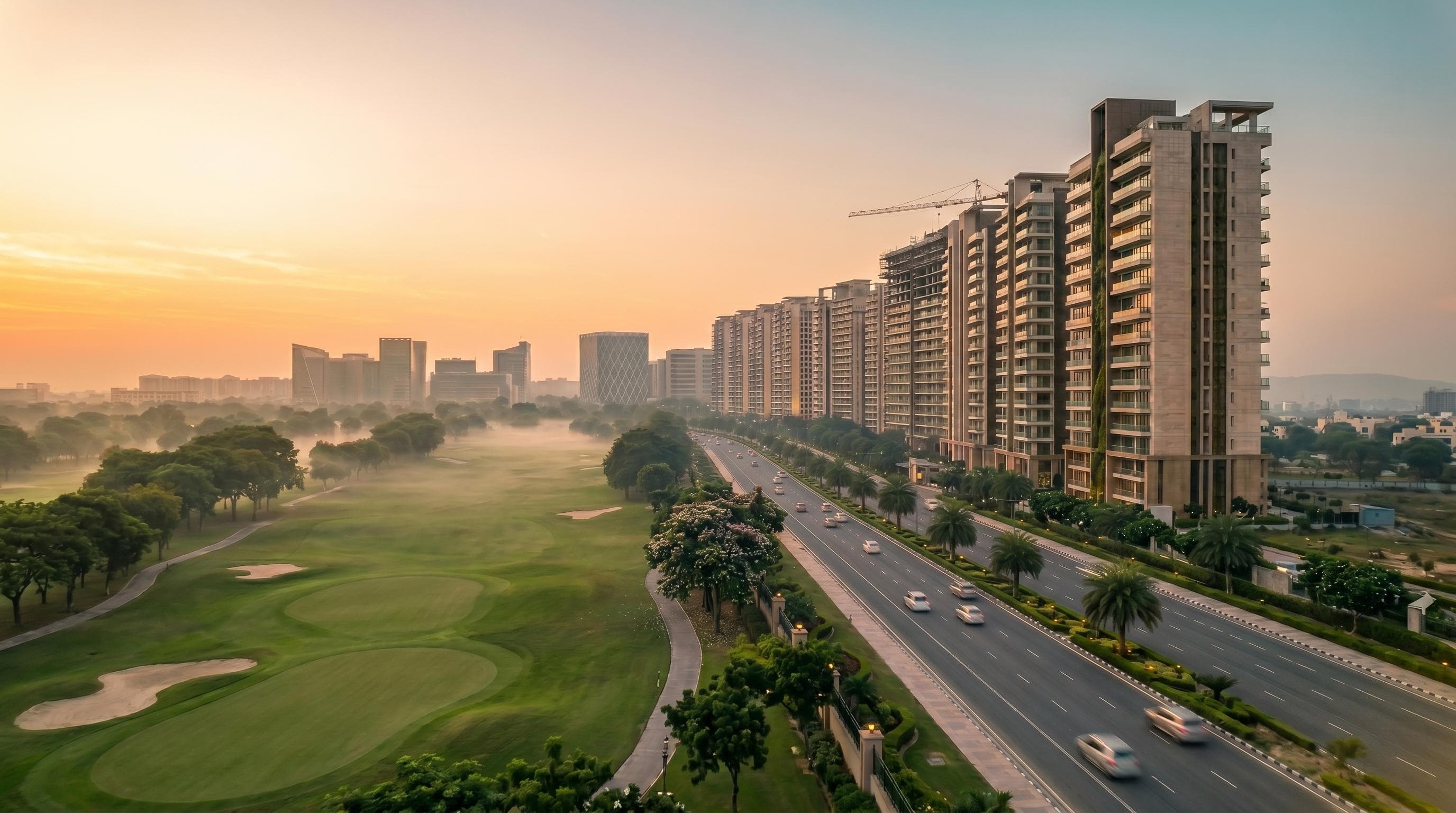
End-user choice: Sector 54 or the adjacent Golf Course Road neighbourhoods. A 3 BHK in a delivered luxury tower in this corridor trades at roughly Rs 26,000 to Rs 32,000 per sq ft, with rental yields of 2.5 to 2.8 percent and historical appreciation of around 6 to 8 percent annually over the last three years. The corridor is mature. Rapid Metro runs through it, every top school and hospital is within a 10-minute drive, and the amenity density is among the highest in India. A family moving in this week owns every part of that lifestyle from day one.
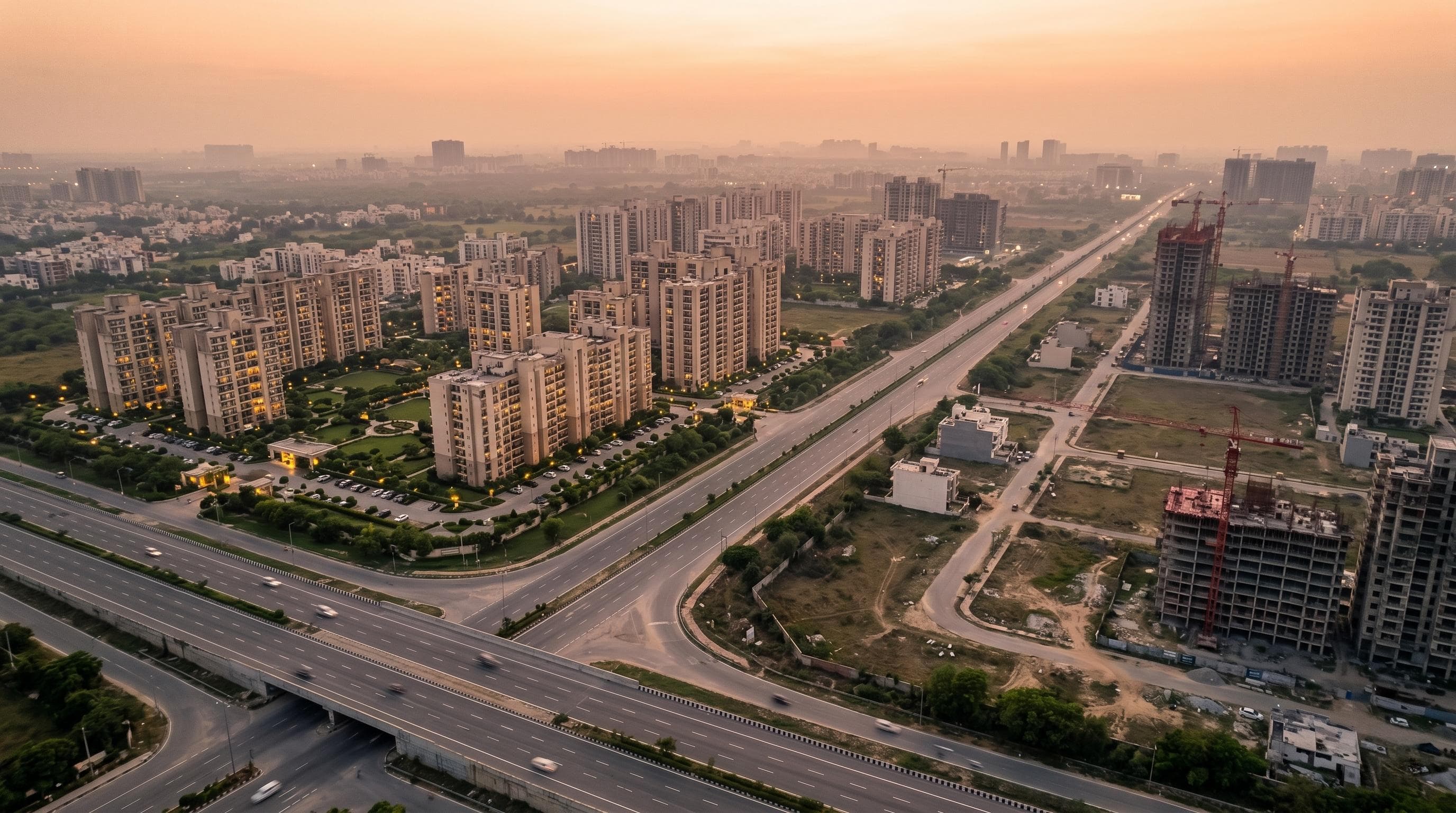
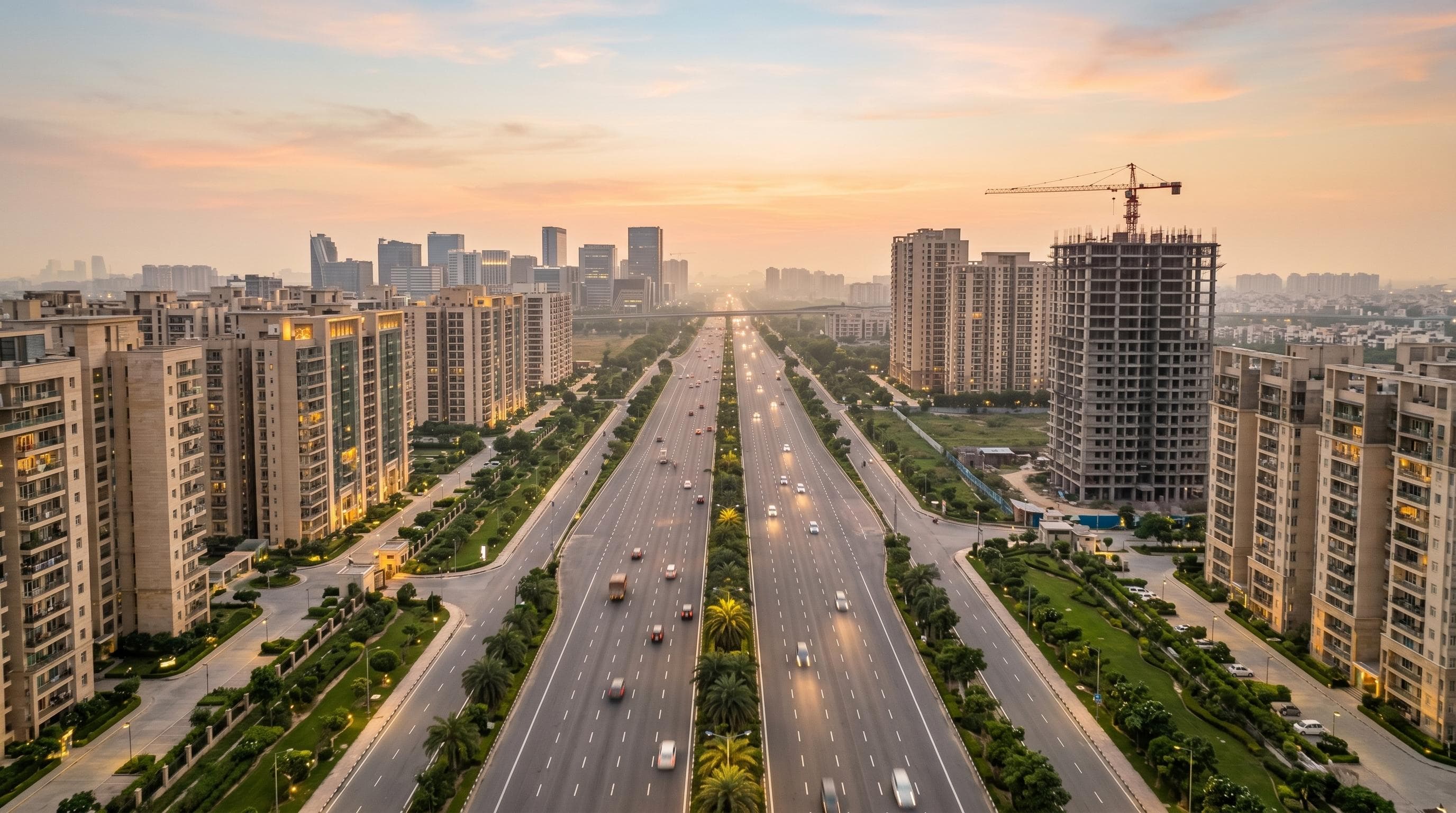
Investor choice: Dwarka Expressway sectors 102 to 113, or SPR micro-markets. A comparable 3 BHK under construction on DXP trades at Rs 12,000 to Rs 18,000 per sq ft, with projected rental yields of 3 to 3.5 percent once delivered and appreciation expectations of 12 to 15 percent CAGR through the construction-to-occupation ramp. SPR is slightly further along the curve at Rs 15,000 to Rs 22,000 per sq ft, with a similar yield and appreciation profile. The infrastructure catalysts behind these numbers, the operational Dwarka Expressway, the upcoming Diplomatic Enclave II, and the proposed metro extension, are real but still unfolding.
The same Rs 2.5 Cr buys a delivered lifestyle in Sector 54, or 1.8 times the square footage on DXP with a 3-year wait. Which path is right depends entirely on whether you need a home today or a return in 2029. It is buying Gurgaon property for investment if it is the second. It is buying a home if it is the first.
The End-User vs Investor Decision Table
A side-by-side reference across the factors that actually drive the two decisions differently.
| Decision Factor | End-User Priority | Investor Priority |
|---|---|---|
| Ideal Corridor | Sector 54, Golf Course Road, mature GCER | Dwarka Expressway Sec 102 to 113, SPR, emerging GCER |
| Entry Price Range | Rs 26,000 to Rs 32,000 per sq ft | Rs 12,000 to Rs 22,000 per sq ft |
| Property Stage | Ready-to-move, delivered and certified | Under-construction or newly launched |
| Rental Yield (Expected) | 2.5 to 2.8 percent | 3.0 to 3.5 percent post-possession |
| Appreciation Outlook | 6 to 8 percent CAGR, steady | 12 to 15 percent CAGR, infrastructure-driven |
| Holding Horizon | 10+ years, family use | 3 to 7 years, exit planned |
| Primary Risk | Paying a premium for what is already priced in | Infrastructure delay, builder default, exit illiquidity |
| Metric That Matters Most | Livability per rupee | Yield plus appreciation per rupee |
| Deal-Breaker | Poor school, commute, or community fit | Unclear RERA registration or stalled infrastructure |
| Emotional Dominance | High. Lifestyle drives the decision. | Low. Spreadsheet drives the decision. |
The Alpha Strategy: Buying the Infrastructure Delta
Experienced Gurgaon investors do something specific that end-users rarely do well. They buy the infrastructure delta.
The infrastructure delta is the price gap between what a corridor is worth today and what it will be worth once an announced piece of infrastructure actually delivers. When the Dwarka Expressway was announced, DXP sectors traded at a sharp discount to Golf Course Road. That gap has compressed by roughly 70 percent since the road opened. The investors who entered in 2020 and 2021 captured most of that compression. The investors entering DXP in 2026 are now pricing the next delta: Diplomatic Enclave II and the proposed metro extension.
The skill is not in spotting the announcement. It is in judging whether the announced infrastructure will actually deliver on time. Most infrastructure announcements in India slip by 30 to 60 percent on timeline. The ones that do deliver on schedule create the real returns. A 20-year Gurgaon advisor can usually tell which camp a project belongs to long before the general market does.
What About Corridors That Fit Both?
Golf Course Extension Road sits in a rare middle position. It has enough delivered infrastructure to work for an end-user family, and enough ongoing growth catalysts to work for a patient investor. That optionality is priced in. GCER projects at Rs 18,000 to Rs 24,000 per sq ft carry a premium over pure investor corridors like DXP, and a discount to pure end-user corridors like Sector 54. For buyers genuinely torn between the two goals, GCER is worth a serious look. For buyers with clarity on which side they are on, there is almost always a better pure play.
Start With the Right Question
At Realty Canvas, two decades of advisory across more than 2,000 Gurgaon transactions have shown us that almost every regretted purchase began with the wrong starting question. Before you shortlist a single project, let us help you clarify whether you are buying a home or building an asset. The answer will narrow your search from hundreds of options to the five that actually fit your goal.
Book a complimentary consultation through realtycanvas.in to speak with an advisor. A clearer decision today is the difference between a home you love and an asset that works. We help with both, separately.