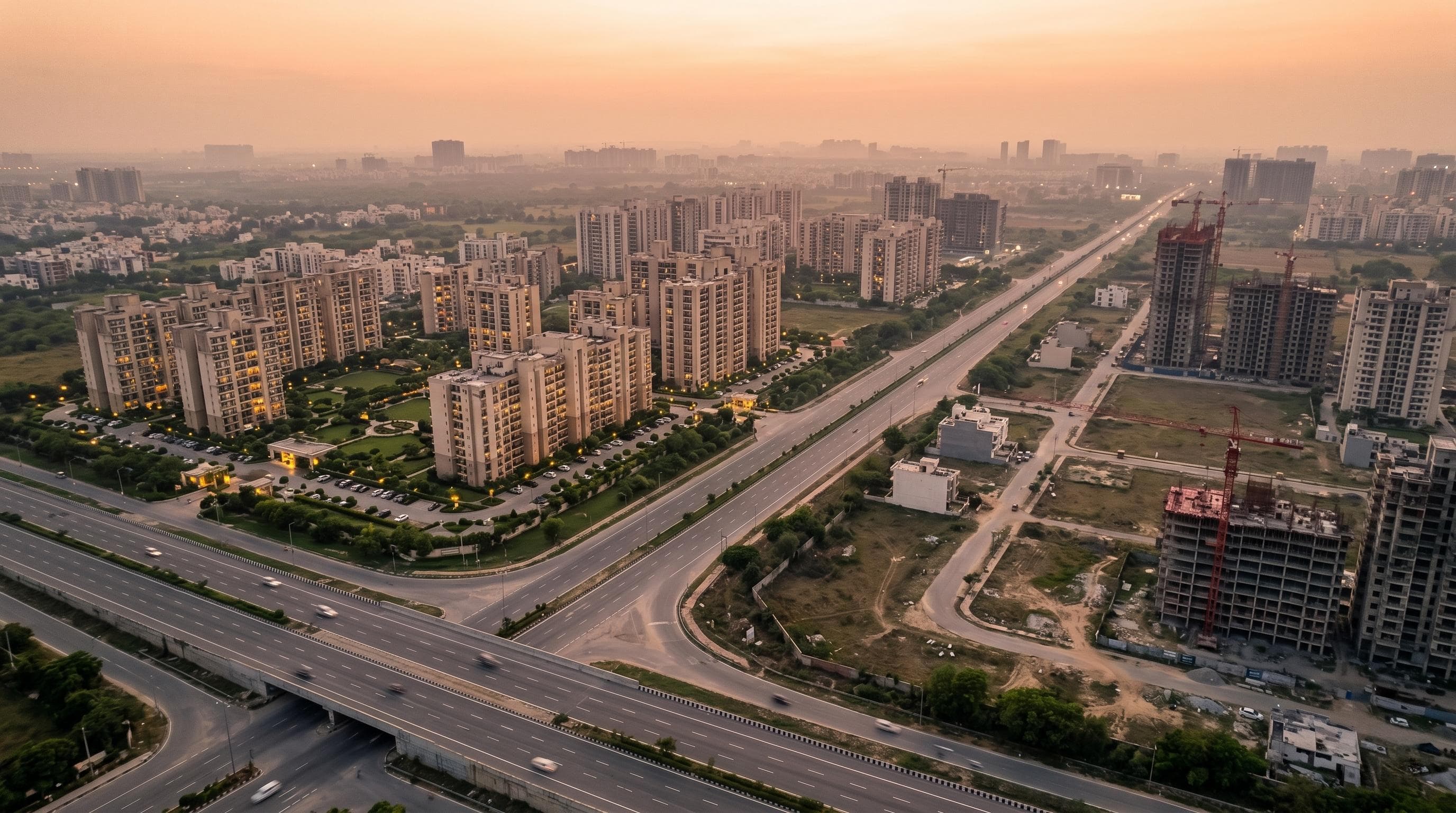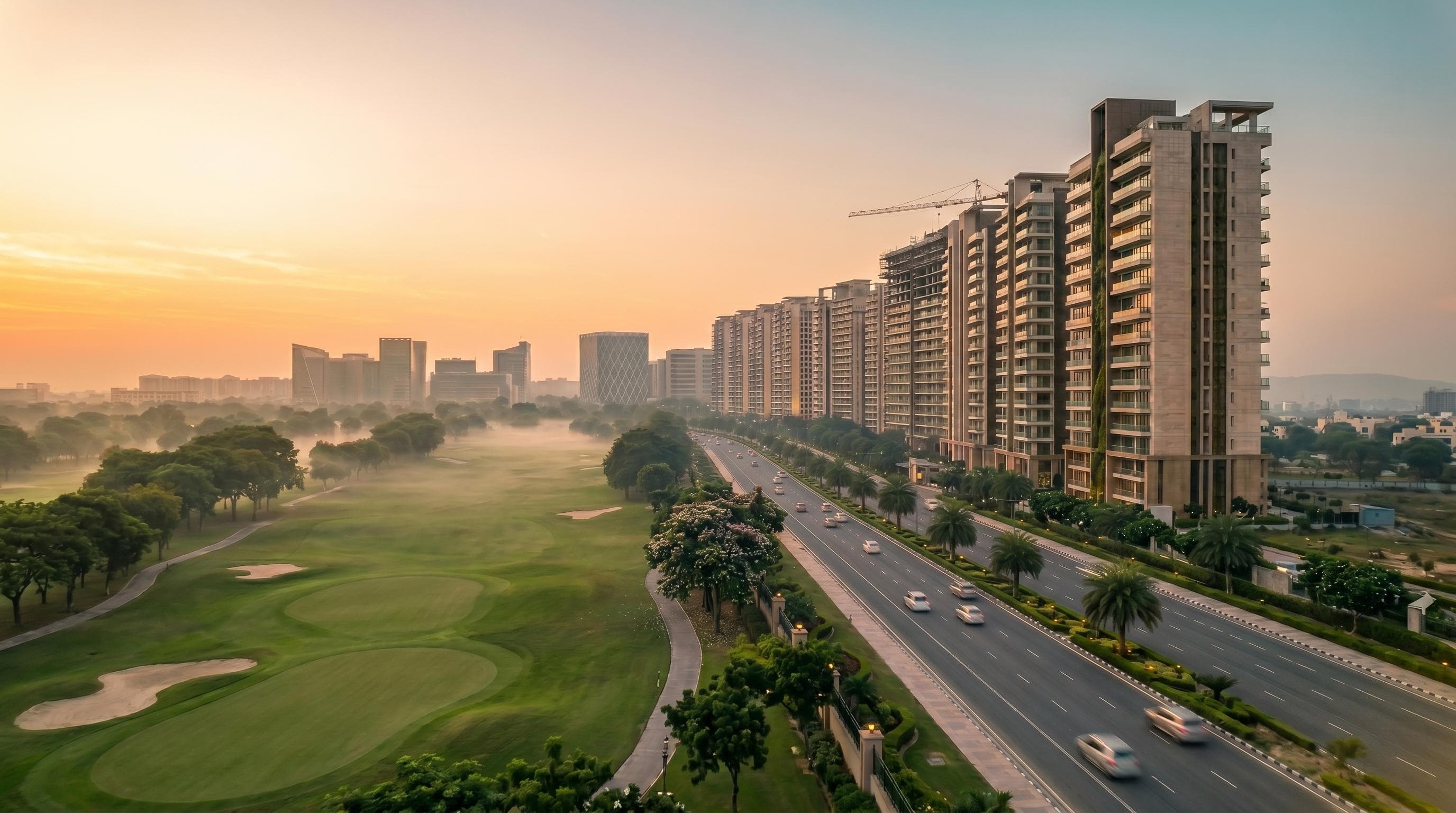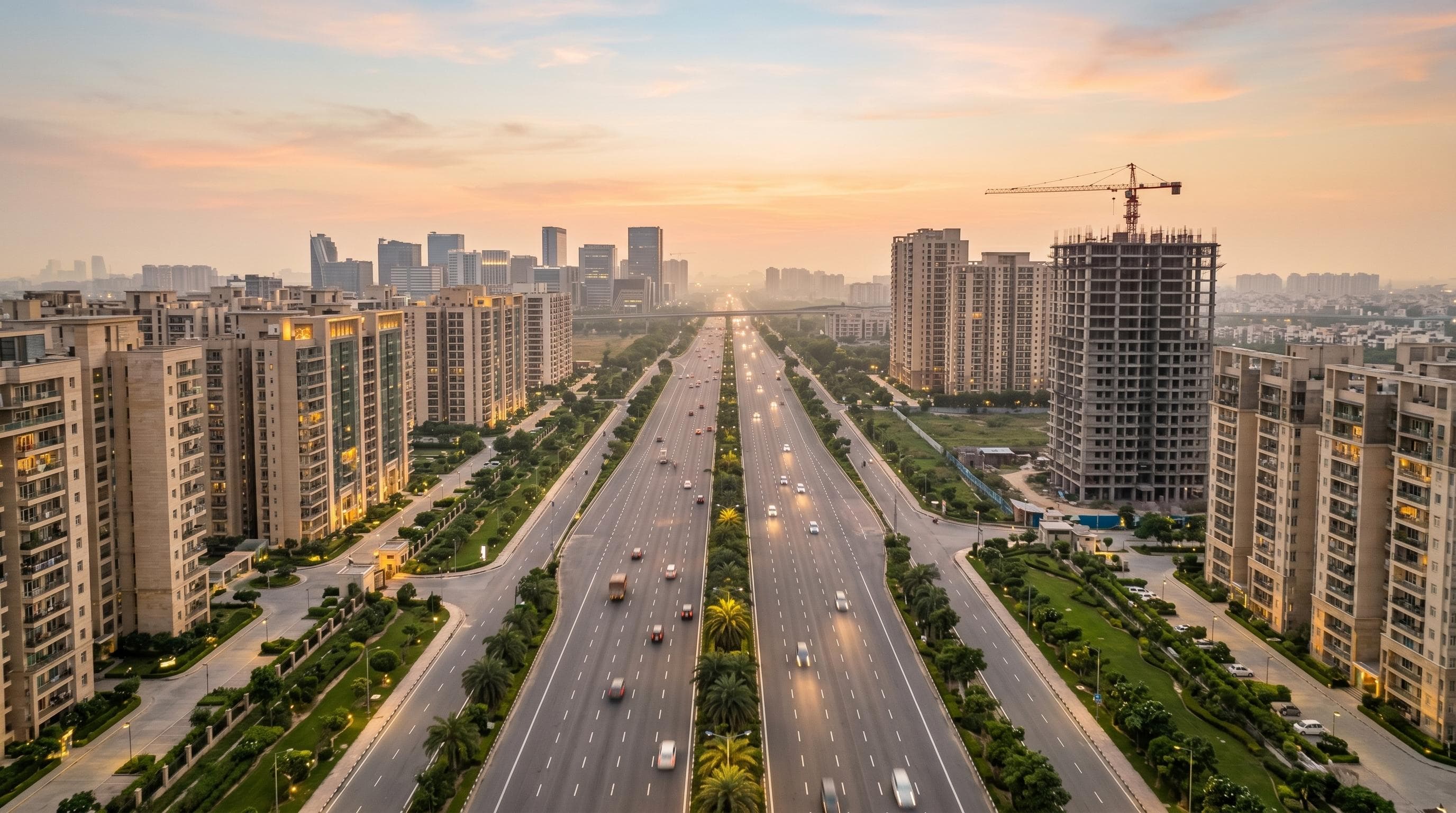
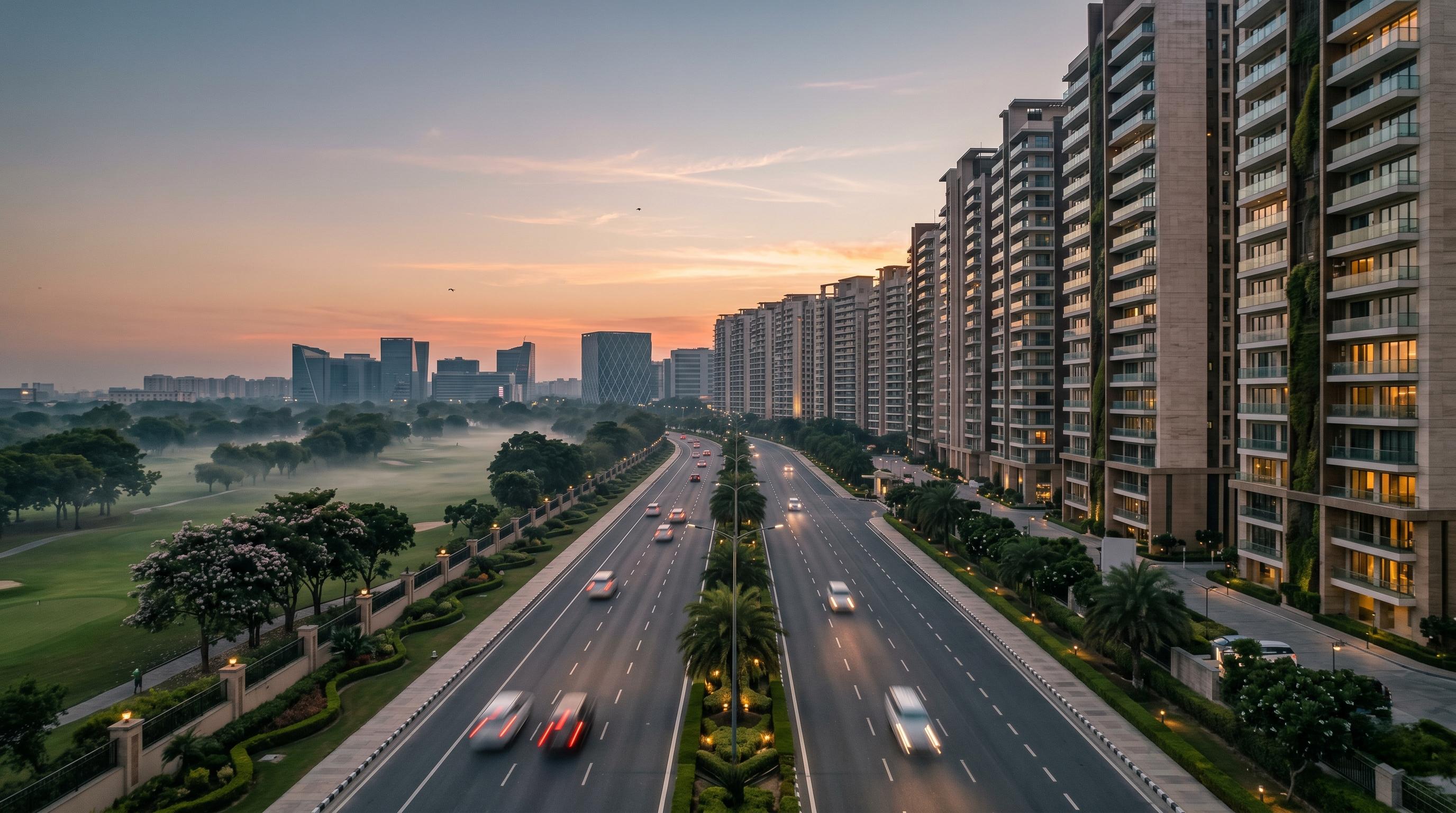
The Short Answer Most Investors Miss
Golf Course Road has not peaked, but it has fundamentally changed. It is no longer a high-growth investor corridor like it was between 2010 and 2018. It has transitioned into a wealth-preservation asset, similar to a Blue Chip stock.
Appreciation today is steady at 6 to 8 percent annually rather than the 12 to 15 percent seen in emerging corridors. In exchange, investors get stability, capital protection, and predictable rental income. This is no longer a runway. It is the destination.
The Real Question Investors Are Actually Asking
The 2018 buyer who entered at Rs 18,000 per sq ft is now sitting at Rs 28,000 to Rs 32,000. The 2025 buyer entering at Rs 30,000 per sq ft is asking whether that math still works going forward.
The honest answer is yes and no. Golf Course Road still works, but it plays a very different role in a portfolio. It is no longer where outsized gains are generated. It is where capital is preserved.
The Blue Chip vs Growth Corridor Framework
The easiest way to understand Golf Course Road in 2026 is through a stock market analogy. Gurgaon real estate now behaves like a spectrum.
- Golf Course Road is the Blue Chip: stable, expensive, low volatility, strong rental income
- Golf Course Extension Road is the Mid Cap: balanced growth with proven appreciation
- Dwarka Expressway is the Small Cap: highest upside with higher risk
- Sohna Road and South Gurgaon are emerging markets: highest returns with highest due diligence requirement
The Three-Corridor Comparison That Actually Matters
| Metric | Golf Course Road | Golf Course Extension | Dwarka Expressway |
|---|---|---|---|
| Entry Price (2026) | Rs 26,000 to Rs 32,000 | Rs 18,000 to Rs 24,000 | Rs 12,000 to Rs 18,000 |
| 5-Year Appreciation | 6 to 8% CAGR | 9 to 12% CAGR | 12 to 15% CAGR |
| Rental Yield | 2.5 to 2.8% | 2.8 to 3.2% | 3.0 to 3.5% |
| Tenant Profile | Expats, CEOs, ultra-HNIs | HNI families | Mid-senior professionals |
| Vacancy Risk | Very low | Low | Moderate |
| Supply | Severely limited | Limited | High |
| Portfolio Role | Wealth preservation | Balanced growth | Aggressive growth |
The Scarcity Factor: Why GCR Has a Real Price Floor
Golf Course Road is expensive because it cannot expand. The corridor is approximately 8.5 km long and was largely built out by 2015. New supply is extremely limited and mostly comes from redevelopment rather than fresh land.
This makes it structurally different from Dwarka Expressway, where large-scale supply continues, and Sohna Road, where new land keeps entering the market.
What Scarcity Actually Does to Pricing
- Resale market controls pricing due to limited new supply
- Distress selling is rare as owners are typically HNIs or institutions
- Demand from new high-net-worth buyers grows faster than supply
The Rental Story: Why Yield Holds Even When Appreciation Slows
Golf Course Road has lower percentage yields at 2.5 to 2.8 percent, but the quality of rental income is significantly higher than other corridors.
- Expat families paying Rs 4 lakh to Rs 12 lakh per month on corporate leases
- C-suite executives with long-term tenancy
- Ultra-HNI tenants prioritising location and lifestyle
This results in stable rent, near-zero vacancy, and consistent rent escalation of 5 to 8 percent annually.
Who Should Still Buy on Golf Course Road in 2026
GCR works well for:
- Ultra-HNIs allocating Rs 8 crore or more into stable assets
- NRIs building long-term legacy portfolios
- Families upgrading to premium primary residences
- Investors needing a stable anchor asset in their portfolio
GCR is a poor fit for:
- Investors targeting maximum 5-year appreciation
- First-time buyers under Rs 5 crore budgets
- Pure yield-focused investors
The Mistake Most Investors Make
Most investors evaluate Golf Course Road using the wrong metric. They focus on whether prices will double, instead of whether capital will remain protected over the next decade.
GCR is no longer about multiplication. It is about protection, consistency, and liquidity.
The Right Way to Think About GCR in a Portfolio
- 40 percent allocation to stable assets like Golf Course Road
- 30 percent to balanced growth corridors like Golf Course Extension
- 30 percent to high-growth corridors like Dwarka Expressway or Sohna
The Final Decision Framework
Golf Course Road is still an investor corridor, but only for investors who understand its evolved role. If your goal is aggressive growth, other corridors are better suited. If your goal is capital preservation, Golf Course Road remains one of the strongest choices in NCR.
The corridor has not peaked. It has matured. That distinction defines how it should be used in a portfolio.