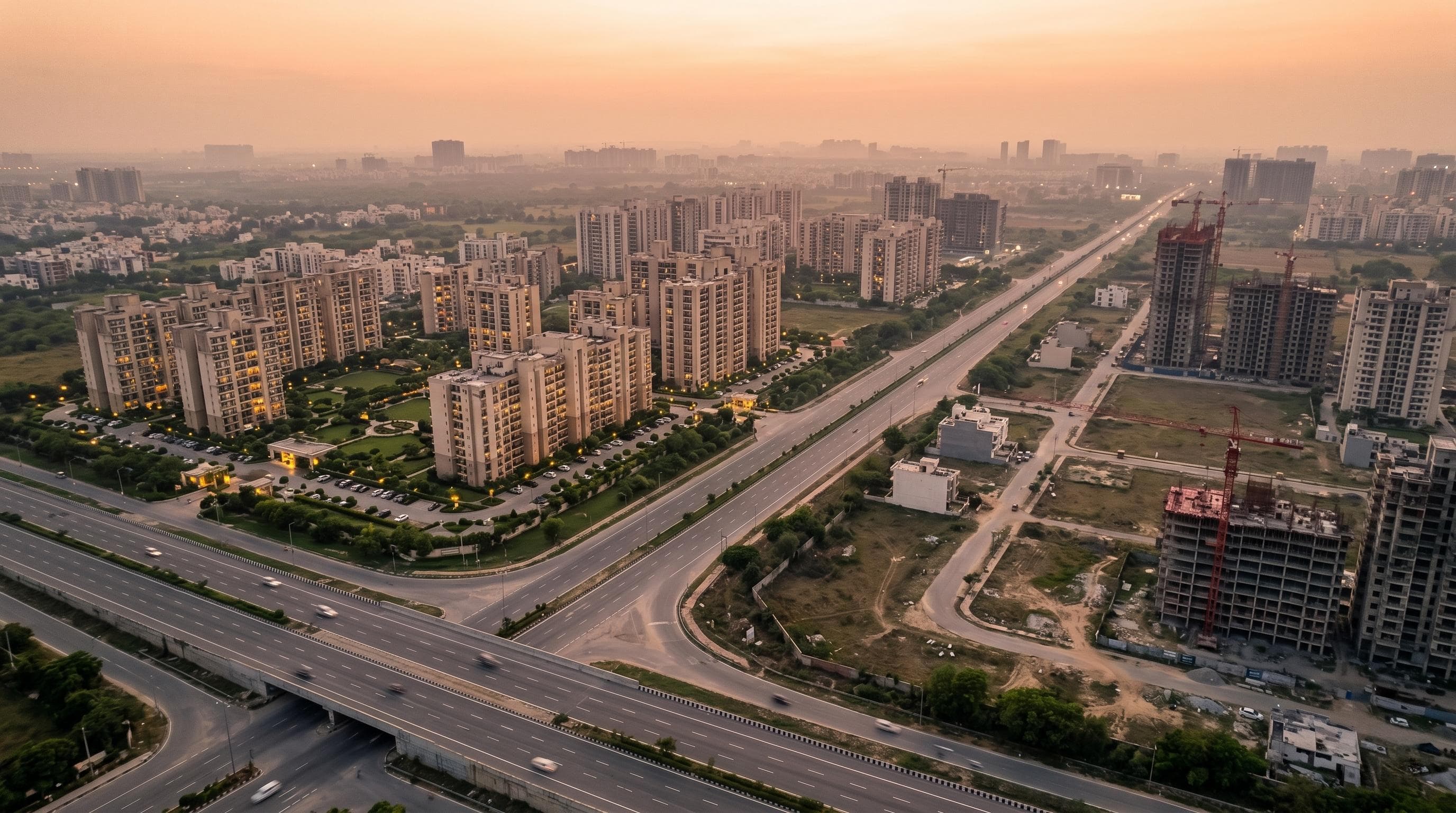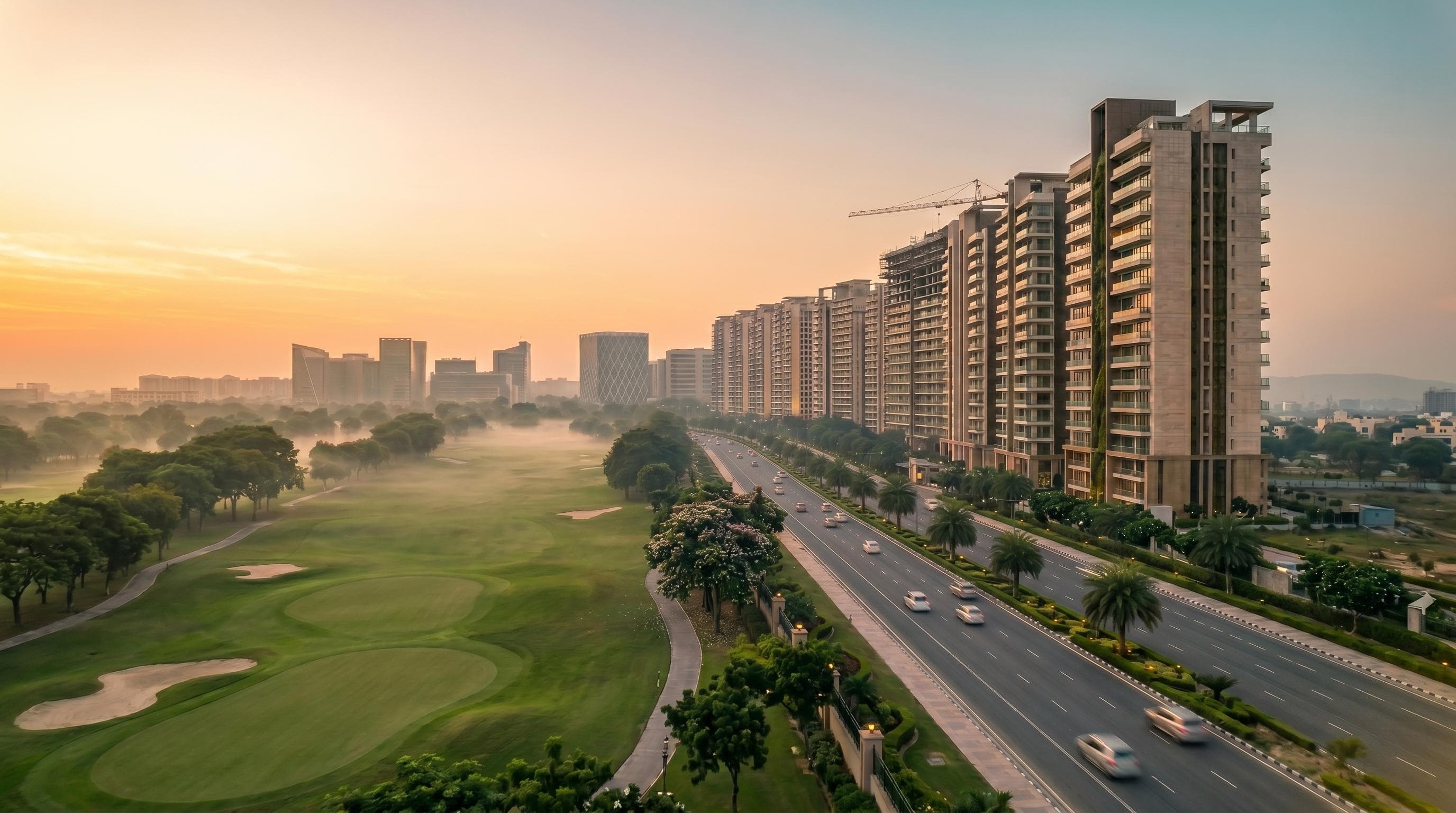
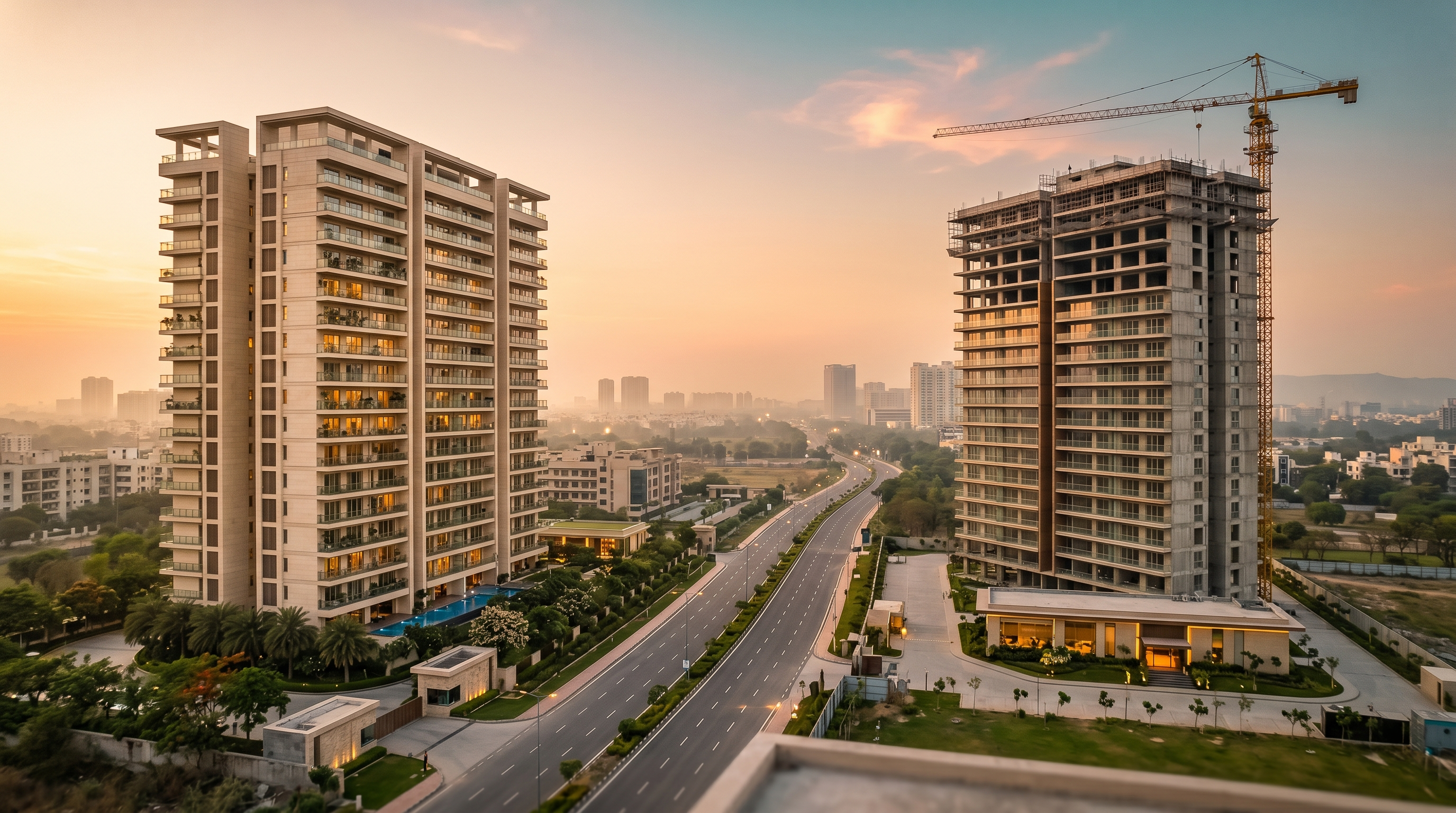
Two buyers stood in the same Sector 65 sales lounge in 2020. Both paid roughly Rs 1.4 crore. One of them today holds an asset worth Rs 3.8 crore. The other is sitting on a flat that would struggle to fetch Rs 1.6 crore if he tried to sell tomorrow.
They did not pick different cities. They did not pick different corridors. They sometimes even picked projects that shared a boundary wall. And yet their outcomes could not be more different. If you care at all about property appreciation in Gurgaon, this is the most important question in the market: why do some projects triple in five years while the one next door goes nowhere?
After advising on more than 2,000 transactions over two decades, the pattern is clear. Gurgaon's 3x projects are almost always built on the same four foundations. Gurgaon's flat projects are almost always missing at least two of them. This post walks through the four, one at a time, so your next purchase sits on the right side of the gap.
1. The Density Factor: Why Towers on Towers Kill Resale Value
The single biggest predictor of long-term appreciation in Gurgaon is density. Specifically, units per acre.
A project built at 150 units per acre feels completely different from one built at 400 units per acre. Lower density means wider spacing between towers, more natural light, better ventilation, less pressure on the clubhouse, less chaos in the parking, shorter waits at the lift, and a genuinely calm feel when you walk through the complex. High density means the opposite on all of those. Once a buyer has walked through a low-density project once, it is very hard to feel good about a high-density one.
This shows up in resale numbers in a way most buyers underestimate. Low-density luxury apartments in Gurgaon routinely trade at 20 to 35 percent premiums over high-density projects in the same sector. Five years of that premium compounds into a massive gap. It is the single reason why M3M Altitude and Adani Samsara Ivana have outperformed projects launched at similar price points in the same micro-markets.
If you are comparing two projects and cannot decide between them, look up the floor area ratio and the unit count before anything else. The lower number is almost always the better bet.
2. Developer Track Record: The Invisible Hand on Your Returns
A builder's reputation is not vanity. It is a real, measurable price driver. Research on developer reputation consistently shows that buyers pay 10 to 25 percent more for the same specifications built by a proven developer versus an unproven one. More importantly, that premium grows over time instead of fading.
The reason is simple. A trusted developer means on-time possession, no legal disputes, no surprise cost escalations, and a well-managed society after handover. Every one of those things protects your resale value. Every broken promise from a weaker builder quietly erodes it.
The flat projects are almost always from developers who have either delayed possession by two years or more, or whose previous projects have poorly-maintained common areas.
The quickest way to judge a developer is not the sales brochure. It is to physically visit a completed project they delivered five to seven years ago. The state of that older project is the future state of the one you are about to book. If the older project looks tired, neglected, or under-lit, do not book the new one.
3. The Future-Price Trap: When the Upside Is Already Baked In
This is the trap that catches the most first-time HNI buyers in Gurgaon. A project is launched with heavy marketing, celebrity endorsements, a viral launch event, and a price tag that is already 25 to 40 percent above the corridor average. The pitch is simple: you are paying a premium today for a premium later.
The problem is that the premium is already in the sticker. There is no real runway for appreciation because the project is already priced at what its three-year future should look like. Buyers who book at launch typically sit on 0 to 2 percent annual appreciation for the first four years while the corridor catches up. Meanwhile, a less-hyped project in the same corridor, launched at the trend line, doubles in the same window.
We have watched this play out again and again across Dwarka Expressway, SPR, and Golf Course Extension Road. The rule of thumb is brutal but reliable. If the launch price is more than 20 percent above the average transacted price for similar-location projects in the last 12 months, you are paying a future price. The best real estate investment opportunities in Gurgaon for 2026 are almost always slightly below the launch-hype cycle.
4. Maintenance Quality: The Price Driver Nobody Writes About
Once the handover ceremony is over and the builder goes home, the RWA takes over. And this is where two identical projects quietly start to diverge.
A well-maintained project is instantly visible. The facade looks cared for. The lobby is spotless. The lifts work. The landscaping is alive. The gym equipment is serviced. The swimming pool is blue instead of green. Little things. Individually they seem trivial. Cumulatively, they add 15 to 25 percent to the resale value of the project over five years.
A neglected project is equally visible. Paint peels. Lifts are out of order. Corridors are dim. The gym has rusted dumbbells. The garden has patchy grass. None of this shows up in the brochure or the builder's track record. All of it shows up the moment a prospective buyer visits for the first time, and it shows up on their offer price.
This is why maintenance charges are not always a bad thing. A project charging Rs 12 to Rs 15 per sq ft in CAM often delivers community care that protects your asset value far better than a project charging Rs 5. The right question is not "how much is the maintenance?" but "what is that maintenance actually delivering?"
Growth Leaders vs Stagnant Projects: Side by Side
Here is how Gurgaon's 5-year winners and 5-year flat-liners compare across the four variables that actually matter.
| Variable | Growth Leaders (2x to 3x in 5 years) | Stagnant Projects (0% to 20% in 5 years) |
|---|---|---|
| Density | Under 200 units per acre. Spacious, green, low tower-to-tower congestion. | Over 300 units per acre. Crowded tower clusters, pressured amenities. |
| Developer | Top-tier brand with 3+ delivered projects in Gurgaon, clean handover record. | Unproven developer or a brand with history of delays and legal disputes. |
| Entry Price | At or 5% to 10% below the corridor average at launch. | 20% to 40% above corridor average at launch. Future price already baked in. |
| Maintenance Quality | Active RWA, well-kept facade, pristine common areas 5 years post-handover. | Weak RWA, peeling paint, non-functional lifts, dying landscaping. |
| Resale Liquidity | 3 to 6 week average listing-to-sale window. Multiple offers common. | 6 to 18 month window. Price negotiations routinely break the asking price. |
| Rental Demand | Steady tenant pipeline, sub-30 day vacancy on exit. | Long vacancy periods, tenants negotiate hard on rent. |
| 5-Year Outcome | 200% to 300% absolute appreciation. Asset outperforms corridor. | 0% to 25% appreciation. Asset underperforms corridor by a wide margin. |
The Scarcity Logic: Why Golf Course Extension Keeps Winning
There is one more quiet force at work, and it compounds everything above. Scarcity.
Golf Course Extension Road has a limited number of remaining land parcels, strict FAR restrictions, and a concentration of low-density premium projects. Every new launch in the corridor adds supply to an already tightly-held inventory base. When demand rises, prices in GCER rise faster than in corridors with unlimited land runway, because there is simply less inventory to absorb the demand.
This is the structural reason why GCER and Golf Course Road consistently produce more 3x outcomes than New Gurgaon or even parts of Dwarka Expressway. Scarcity is not just about corridor. It is also about project type. Low-density premium apartments in any corridor are inherently scarce. High-density supply-heavy projects are not. The math follows the inventory.
Before You Book, Let Us Run the Four Checks
Every regretted Gurgaon purchase we have seen in two decades broke at least two of the four rules above. The good news is that all four can be checked objectively before you pay a rupee. Density is a HARERA filing. Developer track record is a site visit to a five-year-old project. Entry price is corridor data. Maintenance is a walkthrough.
Realty Canvas has advised on more than 2,000 Gurgaon transactions across every major corridor. We run the four checks for our clients before they book, and we say no to projects that fail them, even when our commission is at stake. That is the difference between a broker and an advisor.
If you have a shortlist you are considering, send it to us through realtycanvas.in. We will run the four checks, flag what could go wrong, and tell you honestly whether the project is built for 3x or set up to stay flat.